
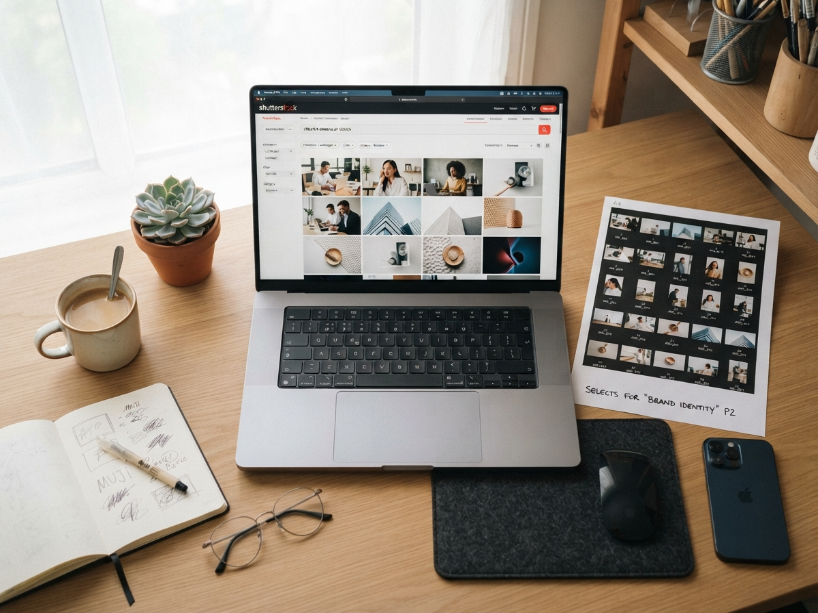
Stock photography remains one of the most practical tools in any creator or marketer’s workflow. The challenge in 2026 is not a shortage of options. it is knowing which platform is actually worth paying for, which free sites have the right licensing for commercial work, and how AI-generated imagery now fits alongside traditional stock libraries.
This guide covers 10 stock photo sites verified against July 2026 pricing and licensing data. Each platform is assessed on four factors: library size and content quality, pricing clarity, licensing terms, and who it actually suits. No platform paid for inclusion.
| Platform | Free plan | Paid from | Library size | Best for |
|---|---|---|---|---|
| Shutterstock | No | $29/mo | 450M+ assets | Agencies, high-volume teams |
| Adobe Stock | Trial only | $29.99/mo | 400M+ assets | Adobe Creative Cloud users |
| iStock | No | $29/mo | 160M+ assets | Premium exclusive content |
| Depositphotos | No | $29/mo (30 images) | 280M+ assets | Budget buyers, high download volume |
| Getty Images | No | $175+/image | 200M+ assets | Media, editorial, enterprise |
| Unsplash | Yes (free) | Free | 5M+ photos | Blogs, social, personal projects |
| Pexels | Yes (free) | Free | 3M+ photos/videos | Social media managers, video B-roll |
| Pixabay | Yes (free) | Free | 2.4M+ assets | Mixed media (photos, vectors, music) |
| Stocksy | No | $55–$350+/image | Curated niche library | Premium brands, authentic imagery |
| Dreamstime | Yes (limited) | $0.22/image (credits) | 250M+ assets | Occasional buyers, low frequency |
Table of Contents
1. Shutterstock. Best for Agencies and High-Volume Teams
Best for: marketing agencies, in-house design teams and content departments that download 10 or more images per month and need a large, reliable library with solid commercial licensing.
As confirmed by Photutorial’s February 2026 review and PhotoWorkout’s March 2026 analysis, Shutterstock operates the largest commercially-oriented stock photo library, with over 450 million images, videos, music tracks, templates and 3D models. The platform is available in 21 languages and has been operating since 2003, giving it one of the deepest and most diverse content archives of any stock site.
Pricing (verified July 2026): Subscription starts at $29/month for 10 image downloads on the annual plan. The standard subscription does not include rollover of unused downloads. On-demand image packs start at $49 for 5 credits. A Gen AI Plus add-on at $7/month provides 100 AI generation credits per month, powered by Gemini 2.5 Flash, Imagen 4, DALL-E 3 and Runway Gen-4, as confirmed by PhotoWorkout’s March 2026 review.
Licensing: standard royalty-free license with $10,000 indemnity. Enhanced license available with $250,000 indemnity. required for large-scale commercial campaigns and merchandise.
Shutterstock and Getty merger note: as confirmed by Photutorial’s February 2026 analysis, Shutterstock and Getty Images announced a merger agreement in January 2025 valued at approximately $3.7 billion. The UK Competition and Markets Authority provisionally blocked the merger in the UK editorial market in late 2025. As of July 2026, both platforms continue to operate independently. Verify current merger status before making long-term subscription decisions.
Honest limitation: no download rollover. unused downloads expire monthly. The library is also large enough that search results for popular topics surface a high proportion of cliched, over-used imagery. Use the “sorted by date uploaded” filter to find fresher content.
Read our full review: Shutterstock review Visit site: shutterstock.com
2. Adobe Stock. Best for Adobe Creative Cloud Users
Best for: designers, photographers and video editors who work primarily in Photoshop, Illustrator, InDesign, Premiere Pro or After Effects and need stock assets inside their existing workflow without switching applications.
As confirmed by Photutorial’s February 2026 review and BKND Development’s April 2026 comparison, Adobe Stock’s defining feature is its native integration with Creative Cloud. Search results appear inside Photoshop and Illustrator directly. Watermarked previews can be placed into active designs and swapped for licensed versions on approval without breaking any linked files.
Pricing (verified July 2026): Entry subscription at $29.99/month for 10 images on the annual plan. Credit packs start at $49.95 for 5 credits for one-off purchases. A 30-day free trial includes 10 full-resolution licensed images to keep even if the subscription is cancelled, as confirmed by Photutorial’s February 2026 review. Adobe Firefly AI generation is available from $9.99/month for 2,000 Firefly credits.
Licensing: standard royalty-free license carries $10,000 indemnity. lower than Shutterstock’s enhanced tier at $250,000. For large commercial campaigns, this gap is material.
Key 2026 update: as confirmed by Photutorial’s February 2026 review, Adobe was running an unlimited Firefly AI generation promotional offer through March 2026. Verify current Firefly credit allocation before subscribing.
Honest limitation: as confirmed by BKND Development’s April 2026 analysis, “for teams not in the Adobe ecosystem, there is no compelling reason to choose Adobe Stock over Shutterstock or iStock. The integration advantage only matters if you are already in Adobe applications.”
Read our full review: Adobe Stock review Visit site: stock.adobe.com
3. iStock. Best for Premium Exclusive Content
Best for: creative professionals, brand managers and agencies who need exclusive imagery that does not appear on Shutterstock or Adobe Stock, and who prioritize the Signature curated collection over volume.
As confirmed by Photutorial’s February 2026 review, iStock is Getty Images’ mid-range platform and splits its content into two tiers: Essential (broader, everyday imagery) and Signature (hand-curated, exclusive content available only on iStock and Getty). The Signature collection exclusivity is the clearest reason to choose iStock over lower-cost alternatives. images from this collection cannot be found on any other stock platform.
Pricing (verified July 2026): Subscription starts at $29/month for 10 Essential downloads on the annual plan. iStock includes rollover of up to 250 unused downloads per month. a meaningful advantage for variable-volume users. Individual credits are $15 each (raised from $12 in 2024), as confirmed by Photutorial’s February 2026 review. Signature Premium content is priced separately and significantly higher.
Licensing: $10,000 standard indemnity, matching Shutterstock’s base tier. Enhanced license available at $250,000. same tier as Shutterstock’s enhanced coverage.
Honest limitation: iStock’s Essential collection is smaller and less diverse than Shutterstock’s for general-purpose needs. The premium value is concentrated in the Signature tier.
Read our full review: iStock review Visit site: istockphoto.com
4. Depositphotos. Best Value for Budget Buyers
Best for: bloggers, freelancers, small businesses and solo creators who need a consistent volume of stock images per month and want the lowest cost per download available on a subscription plan.
As confirmed by Photutorial’s February 2026 review and Toolsurf’s July 2026 comparison, Depositphotos is the most price-competitive major stock platform. At approximately $29/month for 30 downloads on the annual plan, the cost per download is roughly $0.97. compared to $2.90 per download at Shutterstock’s base tier for 10 images.
The platform holds 280 million images, 70 million vectors, and 20 million video clips, as confirmed by Photutorial’s February 2026 review. Search filters include camera angle, season, number of people and orientation. more granular than several larger platforms.
Pricing (verified July 2026): Approximately $29/month annual for 30 images. the most favorable volume-per-dollar ratio of any major paid platform. Monthly plans also available. Image packs available for one-off purchases. A 7-day free trial on annual plans includes 10 images.
Licensing: $5,000 indemnity on both standard and enhanced licenses. the lowest of any major paid platform. As confirmed by Photutorial’s February 2026 review, this is a meaningful gap if your work involves large commercial distribution.
Honest limitation: the $5,000 indemnity cap matters for high-stakes commercial work. For blog posts, social media, presentations and general marketing materials, this limitation is largely irrelevant.
Read our full review: Depositphotos review Visit site: depositphotos.com
5. Getty Images. Best for Editorial and Enterprise
Best for: media publishers, news organizations, global advertising agencies and enterprise brands that need exclusive editorial photography, red-carpet and event imagery, and legally bulletproof licensing for high-distribution campaigns.
As confirmed by BKND Development’s April 2026 analysis and 123RF’s December 2025 guide, Getty Images is the premium end of the market and is not a practical choice for most small businesses or individual creators. Single images start at approximately $175 for standard editorial use, with rights-managed exclusive licensing for high-distribution campaigns priced significantly higher at $199 to $499 or more, as confirmed by Photutorial’s February 2026 review.
Getty’s collection strength is in editorial content. news photography, exclusive celebrity and event imagery, and scientific and historical archives. The company owns iStock for mid-range buyers and Unsplash for free users.
Pricing (verified July 2026): No subscription plans for standard buyers. Individual images from $175. UltraPack bundles at $130 to $299 per image. Rights-managed licensing from $79 for editorial use. Enterprise and media organization pricing is custom-negotiated.
Honest limitation: prohibitively expensive for any use case that does not require exclusive editorial content or enterprise-level legal coverage. iStock is the practical alternative for creators who want Getty quality standards at a lower price point.
Visit site: gettyimages.com
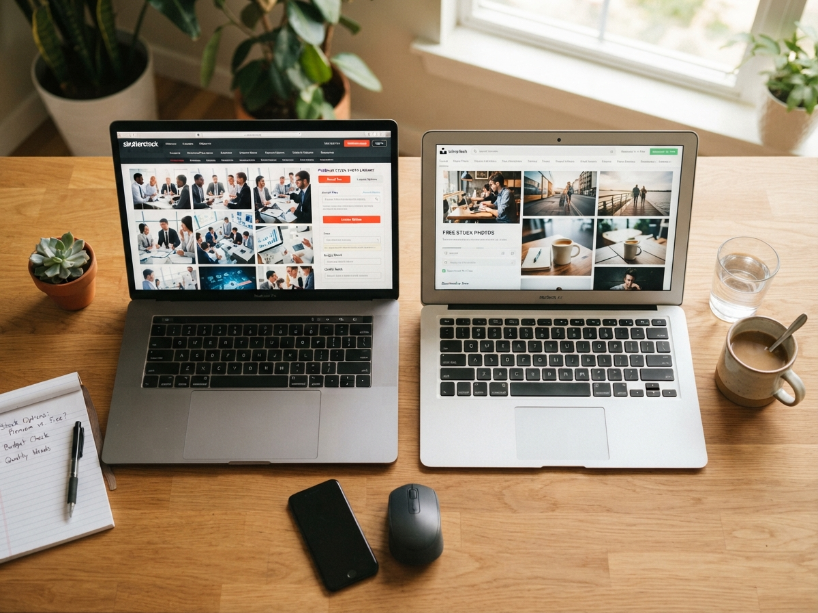
6. Unsplash. Best Free Stock Photos
Best for: bloggers, content marketers, startup founders and social media managers who need high-quality, visually distinctive photography for non-commercial or low-risk commercial use at zero cost.
As confirmed by Photutorial’s February 2026 review and Zapier’s February 2026 guide, Unsplash holds over 5 million curated high-resolution photos and is consistently rated the highest-quality free stock photography source available. The Unsplash license is broad: images can be used for personal and commercial purposes without attribution, which is rare for a free platform.
The platform was acquired by Getty Images in 2021. As confirmed by multiple 2026 reviews, this has not changed the licensing terms or free access model.
Pricing: completely free. No subscription, no credit card, no attribution required.
Licensing: Unsplash License permits commercial use without attribution. The key restriction: images cannot be used to build a competing stock photography service.
Honest limitation: as confirmed by BKND Development’s April 2026 analysis, Unsplash’s most popular images are used by enormous numbers of websites simultaneously. A “distinctive” hero image selected from Unsplash may appear on multiple competitor websites. There is also no legal indemnification. a consideration for larger commercial campaigns where IP risk matters.
Read our full review: Unsplash review Visit site: unsplash.com
7. Pexels. Best for Free Video B-Roll
Best for: social media managers, YouTubers and video content creators who need free vertical video for Reels, TikTok and Shorts alongside photo content in one place.
As confirmed by Photutorial’s February 2026 review and Toolsurf’s July 2026 analysis, Pexels differentiates from Unsplash primarily through its video content. The platform’s free stock video library. including a strong selection of vertical video clips for social media. is one of the most useful free resources for short-form content creators.
Library: 3 million+ free photos and videos. Video is particularly strong relative to the photo collection.
Pricing: completely free. No subscription required.
Licensing: Creative Commons Zero (CC0) equivalent. use for personal or commercial projects, no attribution required on most content.
Honest limitation: as confirmed by Toolsurf’s July 2026 analysis, the photo library is smaller and less consistently curated than Unsplash. For photography specifically, Unsplash has a stronger collection. Pexels’ advantage is in free video.
Visit site: pexels.com
8. Pixabay. Best Free Mixed Media Resource
Best for: content creators who need a mix of photos, illustrations, vectors, music and video clips from a single free platform without separate accounts for each content type.
As confirmed by multiple 2026 reviews, Pixabay holds 2.4 million+ free assets spanning photos, vector illustrations, videos, music tracks and GIFs. all under a CC0-equivalent license. It is the most comprehensive single free platform for mixed media types, making it particularly useful for newsletter creators, bloggers and educators who work across multiple content formats.
Pricing: completely free.
Licensing: Pixabay License (similar to CC0). no attribution required, commercial use permitted.
Honest limitation: as confirmed by PhotoWorkout’s March 2026 review, quality is less consistent than Unsplash across the photo collection. Pixabay’s strength is media variety, not photo quality leadership.
Read our full review: Pixabay review Visit site: pixabay.com
9. Stocksy. Best for Authentic Premium Photography
Best for: brands with a defined visual identity who need photography that does not look like stock. lifestyle, fashion, food, wellness and creative industry brands that cannot afford for their imagery to appear on a competitor’s website.
As confirmed by BKND Development’s April 2026 analysis, Stocksy is a photographer-owned cooperative that deliberately curates for authentic, non-cliched imagery. The business model. photographers own equity and receive higher royalty rates than any major competitor. creates different content incentives. The result is a library that consistently produces imagery described by reviewers as looking “like something a professional brand photographer shot, not something pulled from a stock library.”
Pricing (verified July 2026): Per-image pricing from $55 for small web-use files. Standard royalty-free images typically $55 to $120. Extended licenses and video content range from $155 to $350+. No subscription plan. all downloads are per-image or by credit pack.
Read our full review: Stocksy review Visit site: stocksy.com
10. Dreamstime. Best for Occasional Buyers
Best for: independent creators, bloggers and small businesses who download images infrequently. fewer than 5 per month. and want the lowest possible cost per image without a monthly subscription commitment.
As confirmed by eCommerceTips’ analysis, Dreamstime offers individual image credits starting at approximately $0.22 per image at the high-credit-pack level. the lowest per-image cost of any major paid stock site. With 250 million+ assets including photos, vectors, illustrations, audio and video, the library is comparable in size to Depositphotos.
Pricing (verified July 2026): Credit packs starting at $0.22 per image at volume. Monthly subscriptions also available. Free tier provides a limited selection of watermark-free images.
Honest limitation: as confirmed by PhotoWorkout’s March 2026 analysis, Dreamstime’s subscription plans are less competitive than Depositphotos for regular high-volume buyers. The per-image credit model is where Dreamstime genuinely excels. only for infrequent purchasers.
Read our full review: Dreamstime review Visit site: dreamstime.com
How to Choose: A Decision Framework
1. Do you need a subscription or one-off images?
10+ images per month: subscription (Shutterstock, Depositphotos or iStock). Fewer than 5 per month: credit packs (Dreamstime) or free platforms (Unsplash, Pexels).
2. Are you already in the Adobe ecosystem?
Yes: Adobe Stock’s Creative Cloud integration saves significant workflow time. No: Shutterstock or Depositphotos offer better value.
3. Does licensing indemnity matter for your use case?
Large commercial campaigns, merchandise or billboard advertising: Shutterstock Enhanced ($250,000) or iStock Enhanced ($250,000). Blog, social media and general marketing: Depositphotos Standard ($5,000) is adequate.
4. Is your budget zero?
Blogs and social media: Unsplash (best quality). Video content: Pexels (best free video). Mixed media: Pixabay. All three are free with no attribution required for most uses.
Stock Photos vs AI Image Generators in 2026
The rise of AI image generation tools has changed how creators approach visual content. As confirmed by Toolsurf’s July 2026 analysis, “AI-generated images have emerged as an increasingly popular option in 2026. Tools like Midjourney, Adobe Firefly and GPT Image 2 can create custom images on demand, eliminating the need to search through stock libraries entirely.”
The practical distinction in 2026 is not either/or. it is knowing which type of image to use for which situation:
Where stock photos still win: Real human emotion and authentic lifestyle photography. Editorial and news content where AI generation is prohibited. Legally-indemnified commercial campaigns where IP safety is a hard requirement. Situations where speed of search is faster than speed of generation.
Where AI image generation wins: Highly specific scenes that no stock library covers. Consistent character or brand mascot imagery across multiple images. Custom product mockup photography. Situations where the “stock photo look” actively undermines your brand.
For a detailed comparison, see our guide: AI Images vs Stock Photos: Which Should You Use?
For AI image generation options, see: Best AI Image Generators
Frequently Asked Questions
What is the best stock photo site overall? For most users who pay for stock photos, Shutterstock is the most reliable all-round choice in 2026. with the largest commercially-oriented library at 450 million+ assets, solid royalty-free licensing and subscriptions from $29/month for 10 images. Adobe Stock is a stronger choice for users already working in Photoshop, Illustrator or Premiere Pro. For free stock photography, Unsplash consistently produces the highest-quality curated images at no cost with no attribution requirement for most uses.
What is the best FREE stock photo site? As confirmed by Photutorial’s February 2026 review, Unsplash holds the strongest collection of free stock photography. over 5 million high-resolution images, all available for commercial use without attribution under the Unsplash License. Pexels is the strongest free platform for video B-roll. Pixabay covers the broadest mix of media types (photos, vectors, music, video) at zero cost.
How much do stock photos cost? Subscription pricing ranges from approximately $29/month for 10 downloads (Shutterstock, Adobe Stock, iStock) to $29/month for 30 downloads (Depositphotos), verified against July 2026 pricing. Individual image credits on Dreamstime start at approximately $0.22 per image in bulk. Getty Images editorial content begins at approximately $175 per image. Free platforms. Unsplash, Pexels and Pixabay. cost nothing.
What is royalty-free actually mean? Royalty-free does not mean free. As confirmed by PhotoWorkout’s March 2026 licensing guide, royalty-free means you pay once to license the image and then use it indefinitely within the license terms. without paying additional royalties for each use. Standard royalty-free licenses on Shutterstock, Adobe Stock and iStock permit unlimited web use, social media use and print runs up to approximately 500,000 copies. Extended licenses are required for merchandise, templates for resale and very high print volumes.
Do I need to credit stock photos? It depends on the platform. As confirmed by PhotoWorkout’s March 2026 licensing guide: paid platforms (Shutterstock, Adobe Stock, iStock, Depositphotos) require no attribution on standard licenses. Unsplash and Pexels appreciate attribution but do not legally require it for most uses. Pixabay does not require attribution. Freepik’s free tier requires attribution. paid plans remove this requirement.
Is Shutterstock and Getty Images merging? As confirmed by Photutorial’s February 2026 review, Shutterstock and Getty Images announced a $3.7 billion merger agreement in January 2025. As of early 2026, the UK Competition and Markets Authority had provisionally blocked the UK editorial market portion of the merger, with a final decision expected in April 2026. Both platforms continue to operate independently as of July 2026. Verify current status at each platform’s official site.
Are AI-generated stock photos appearing on stock sites? Yes. As confirmed by multiple 2026 reviews, AI-generated images have entered major stock libraries on all major platforms including Shutterstock, Adobe Stock and iStock. Platforms like Rawpixel now allow users to filter for or exclude AI-generated content in search results, as confirmed by Zapier’s February 2026 review. If authentic, human-photographed images are important for your use case, use the AI content filter where available.
Read the Full Reviews
Detailed pricing, pros and cons and verdicts for each platform mentioned above.
Shutterstock
Full review covering 450M+ library, $29/mo subscription, AI generator add-on, licensing tiers and the Getty merger situation.
Adobe Stock
Full review of Creative Cloud integration, 30-day free trial, Firefly AI generation and how it compares to Shutterstock for non-Adobe users.
iStock
Full review of Essential vs Signature collections, rollover credits, $29/mo pricing and why exclusivity matters for brand-sensitive projects.
Depositphotos
Full review of 30 images for $29/mo value, 280M+ library, $5,000 indemnity limitation and who it suits best vs Shutterstock.
Related: Shutterstock vs Adobe Stock | iStock vs Shutterstock | AI Images vs Stock Photos | Best Stock Video Sites | Best AI Image Generators
Sources used in this article: Photutorial: Best Stock Photo Sites 2026, February 2026 (photutorial.com) BKND Development: Best Stock Photo Sites 2026, April 2026 (bknddevelopment.com) PhotoWorkout: 13 Best Stock Photography Sites 2026, March 2026 (photoworkout.com) Toolsurf: Best Shutterstock Alternatives 2026, July 2026 (toolsurf.com) Photutorial: 6 Best Shutterstock Alternatives 2026, May 2026 (photutorial.com) Zapier: 6 Best Free Stock Photo Sites 2026, February 2026 (zapier.com) 123RF Blog: Top 10 Stock Photo Websites of 2026 (blog.123rf.com)